top of page

Not-yet-published pieces, stories, essays, rants, and random strangenesses

day10amap.jpg

The wind is so high, it’s causing dust devils all over the place—pink-brown whirlwinds of dust, dancing like small tornadoes, dancing against the blue sky.

In one place, the dust devil was the width of an entire field, and was so thick it looked like a dust storm, albeit a stationary and tornadic one.

There were other signs I was entering the Real West as well. Leaves and husks from dried corn would blow across the road as if they were birds, skittering across like animals, but lifeless ones. Small tumbleweeds are appearing. Buffalo burgers are served at all the rest stops. And there are actual signs, too: Lakota Museum. Lower Brule Tribal Headquarters. Week’s Ponderosa Café—We Still Cook! Map of the Black Hills—Wall Drug.

Women in these parts drive trucks, wear jeans and flannel, sport short-cropped hair, and have tough, masculine personas. You might call them heterosexual lesbians. An actual lesbian couple I ran into at a gas station were an older couple from Michigan, one very butch and the other very femme, heading to Mount Rushmore and then down to Atlanta. They’ve allowed themselves six weeks for the journey.

Kadoka, South Dakota, holds an International Outhouse Race each year: two people carrying a real privy, with a third person inside. I’m so sorry I missed it! (This should not be confused with the Great Klondike International Outhouse Race held annually in Dawson City in the Yukon.)

The land itself is changing now. On the right was a rocky patch in the middle of the plains. On the left you could see a butte, then a cavern that appears out of nowhere, a sudden great void of earth. Prairie dogs are spotted frequently. And the accents have changed from the comical Minnesotan/Dakotan inflection with its Scandanavian influences to a decidedly Western twang, a cowboy lilt to the speech.

The badlands are amazing.

Breathtakingly beautiful. I’m not yet in the national park, but I can see why the Lakota called these mako sica, “bad lands”: desperately arid terrain (but when it does rain, the flash floods sweep away everything in their path); land extensively eroded by wind and water; difficult to walk on, with its steep slopes, loose soil, and clay; and canyons, ravines, gullies, and hoodoos all around.

But they are spectacular to look at. In bright sunlight, the colors alternate from blue-black coal striations to bright clay to red scoria (porous fragments of hardened volcanic lava). At dusk, the landscape turns impossible hues of gold, pink, and purple.


Once again I see that I’m about a week behind the tourists, a realization that makes me very happy indeed. There are still a good number of visitors, though, but at least they are as amazed as I am at the rock formations that leap up at you out of nowhere. Primitive, dramatic, exciting. Well, nearly as amazed. They’re driving 45 miles an hour, and I want to crawl along to drink in the scenery.

I finally arrive in Wall, South Dakota, “Window to the West.” It’s named Wall because the town sits on a wall of the badlands (a wall is where the land gives way to cavern). Its singular claim to fame is, of course, the Wall Drug whose signs have been such a wretched blight on the landscape for the past 400 miles. Now the town of Wall boasts “endless entertainment opportunities for old and young alike” with “fine dining, swimming, golf, tennis, and shopping.” And, of course, an 80-foot dinosaur marking the highway exit. I saw a dusty, run-down town boasting nothing at all except for the Wall Drug tourist trap.

The final Wall Drug sign, 80 feet from the establishment, is moving. It has a man on a bucking bronco; a bear with a stewpot on its head, waving its arms frantically to get the stewpot off; another bear reaching for the chuckwagon food, with the cook swinging a frying pan; and a cowboy on horseback, gun pointed in the air, with the horse rearing up. All of them moving at once.

Wall Drug at last. Of course nothing could live up to 400 miles of hype. I wanted it to be more charming than it was, or failing that, tackier. I go through their “Wall Mall,” an extensive series of souvenir stores linked, oddly, by boardwalks, forgo their famous free ice water because there was a long line, and decide to skip their café. Besides, I wanted to get back to the badlands themselves.

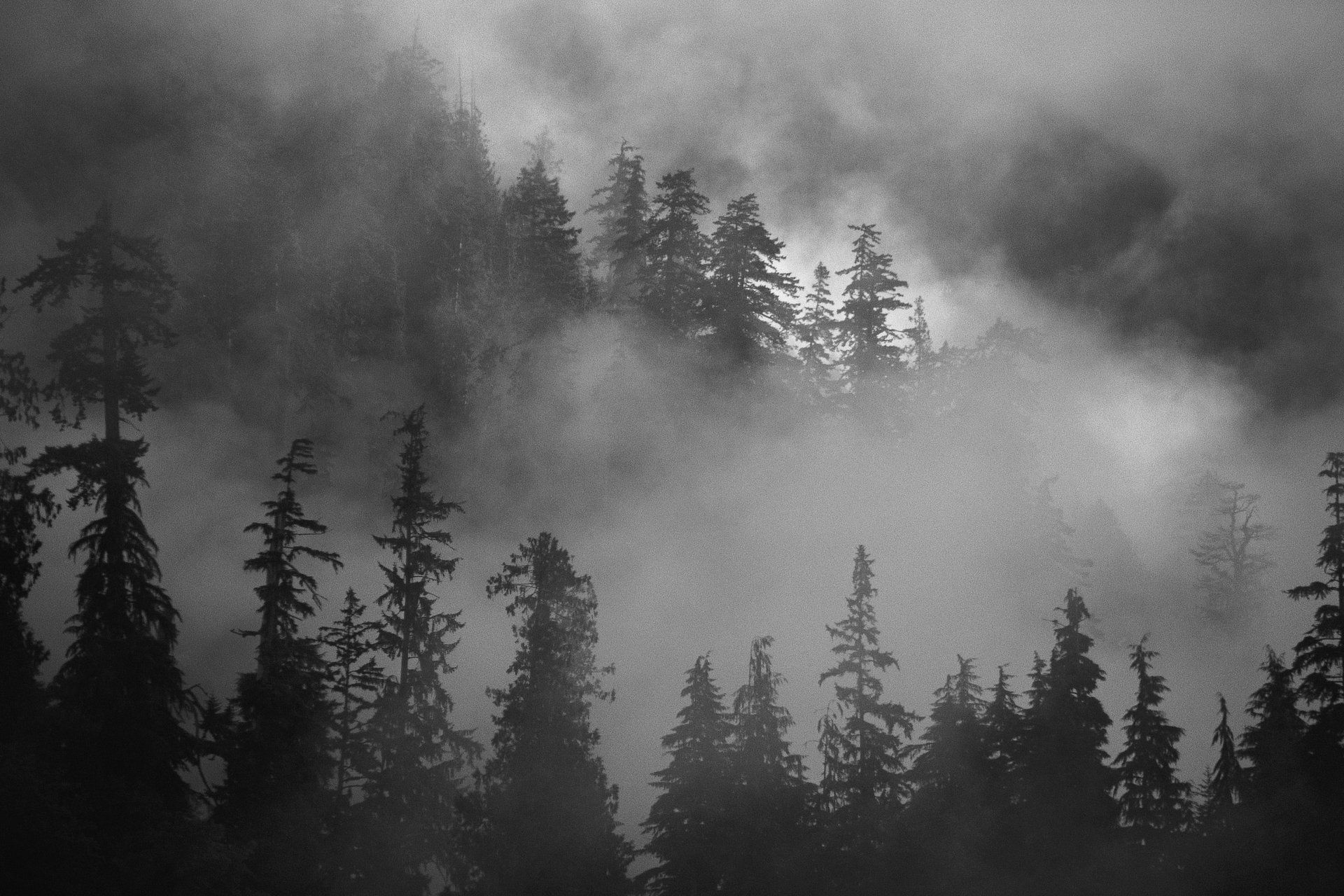
I took tons of photos, none of which really captured the glory of the place (the one above is not mine, but was taken by Danny Burk, a gifted nature photographer). Badlands National Park featured a very nice, carefully managed drive with many overlooks, subtle enough that you didn’t feel that you were ruining the landscape by your very presence. The rock formations were haunting; I wanted to stay there, to drink in more and more of it, to understand its message.

After I left the national park, I decided to have dinner in Rockerville before seeing Mount Rushmore, so I headed toward the Black Hills. Immediately I see a coyote lying dead on the side of the road. The first coyote I’ve ever seen, and it’s dead.

Then, a little further on, a dead whitetail deer.

Perhaps I should have taken them as omens.

Next episode: Terror in the Black Hills


day9map.jpg

As I leave Pipestone, I say on the tape, “Ever since St. Paul I thought that everything was new and it was all beginning. It’s getting even newer as I, in a few minutes, cross into South Dakota. All the other states, I’ve been in or driven through before. This is new. This is brand new. I’m going where I feel no one has ever gone, yet it’s only me. I need to know what is true in me, I need to understand what it is I believe, and know what is eternal about what I believe—to know a little bit about the Red Road and know where my own road crosses it.”

The

signs for Wall Drug are coming fast and furious now.

  1. “Wall Drug of South Dakota—Then Mount Rushmore.”

  2. “Horse ‘Twitches’—Wall Drug.” (I never did learn what horse “twitches” were.)

  3. “Everything Under the Sun—Wall Drug of South Dakota.”

  4. “191 Miles to Wall Drug.”

  5. “All Roads Lead to Wall Drug.”

  6. “Wall Drug As Told By The Aukland Star.”

  7. “Free Ice Water—Wall Drug.”

It’s really amazing how I’ve always heard talk about wide open spaces—and now, seeing South Dakota, I understand what they mean. It sort of makes you love the country, love the space. I just can’t get over how terribly cramped the D.C. area seems to me now in my heart.

I took a detour into Hartford, population 1200. The sign at the gas station I stopped at proclaims they are “big on being small.” And two young boys on bicycles stopped and came over to me as I was filling up my gas tank, said hi to me, and asked where I was from. When I told him I was from Washington, D.C., he let out a big whoop of amazement. “Why in the world are you traveling through this town?” he asked. “Why are you on this trip? Where are you going? Do you know people out here? How can you be going someplace where you don’t know a soul?” He peppered me with questions, and seemed slightly mystified.

I found out that he and his family have lived in this town “ever since I came back from the hospital.” They’ve traveled a bit themselves, visiting relatives in Washington state (“it’s really nice out there”). I tell the boys my story, amazed at their friendliness, their unguardedness toward a stranger, delighted with their warmth and interest.

Things may have changed since 1991, but at that time there were six people per square mile in South Dakota, versus 320 per square mile in Connecticut.

As I pass Sioux Falls, a huge billboard proclaims, “Reject Animal Activists! Fair Game, Fish, and Wildstock Are Our Economy!”

I enter Mitchell, and

head immediately to the famous

Corn Palace. It’s an exhibition hall the size of a city block, topped with onion-shaped domes and covered with tens of thousands of dollars worth of oats, sorghum, barley, sudan grass, and of course corn. Yes, the façade really is covered in corn. White corn, red corn, brown corn, yellow corn, blue corn, speckled corn, splotchy corn—eventually pigeon-pecked corn, thus giving the Palace its nickname: The World’s Largest Bird Feeder.

The corn isn’t randomly stuck on willy-nilly, but each ear is skillfully sliced in half lengthwise with a powersaw, trimmed if necessary with a hand axe, and carefully nailed in place, according to large corn-by-number drawings tacked up on tar paper. They are arranged to make murals: largely Americana scenes like pastoral fantasias, wagon trains on the move, Indians at sunset, that sort of thing.

The Palace itself is a convention center, and hosts rodeos, high school basketball games, farm machinery shows, polka parties, and the annual Corn Palace Festival (usually mid- to late-September, when I arrive in town, and they stay open until 10 p.m., so I have my evening all mapped out for me. My expectations are naturally very high.

I pull up in front and . . . it is closed.

The Corn Palace is closed. Zeke’s Souvenirs is closed. The Enchanted World Doll Museum is closed. The Corn Palace Souvenir Shop is closed. Authentic Indian Crafts is closed. All when they should be open. The other tourists are as mystified as I am.

Pedro’s Mexican Food is open, however, though I don’t know why. It’s 7 p.m., and I’m ravenously hungry (on the tape I say, “I want to eat someone!”), but Pedro’s is just too depressing.

Mitchell itself seems pretty depressed, despite its tourist mania. It’s a small, disappointing place: tacky, very overwrought. The Corn Palace exudes the feeling of “Puh-leese give us some economy, give us some funds, we can’t do it on our own!”

I stay in a cheap motel, and start worrying about the rest of the week. The next day, Thursday, would be spent driving the length of South Dakota and seeing the Black Hills, and preparing for Friday’s ceremony on the reservation, assuming Vincent Blackfeather, the medicine man, would agree to see me. And I started worrying about the ceremony itself. What would I be told? Would he tell me I’m crazy? Would he give me a new name? Would I be able to dismiss it if I didn’t like what he said? Or would he reject me out of hand, or snub me, or laugh at me?

It wasn’t a comfortable sleep.

I woke up in the night with these words ringing in my ears, or at least in my mind: Embrace All. Accept All. Say Yes to All.

Next episode: The Badlands


day9map.jpg

The Butterfield Café had a terrific breakfast special: 2 eggs, 2 cakes, 2 sausage, 2 bacon, $2.75. The bacon was extraordinary. The waitress wore jeans and a Hawaiian shirt. There were signs for Mountain Dew on several of the walls, reflecting their overuse on the sides of the buildings in this little town, and everyone said, “You bet!”

All the folks in the café were regulars. They helped themselves to coffee, sat in the same seats each day, and the cook would come out and sit with them when he wasn’t busy. I learned that Butterfield’s main industry was its chicken processing plant. These guys slaughtered chickens for a living, killing some 60,000 of them a day, most of them destined for pot pies and such (not Perdue quality chicken, which I learned are mainly processed in

Washington state).

Butterfield’s other claim to fame was its annual “Camping Bee” with its “Hiawatha Days,” about which I unfortunately could learn nothing, though there were these ancient steam tractors on permanent display at their fairgrounds. A kid in town said that Butterfield had a population of 900; the visitors I met the previous night while camping said it was around 600. Either way, welcome to small town America.

A murder of crows (I love terms of venery, those collective nouns for groups of animals: a shrewdness of apes, an exaltation of larks, a storytelling of ravens) were congregating over my campground, which I passed on my way out of town. Felt slightly ominous.

The prairie wind started whipping up, and I had trouble keeping the car on the road. It felt like a typhoon. An hour later, I see a sign: Warning: Strong Crosswinds Next Half Mile. Yikes—if what I had just been through wasn’t considered strong, what in the world was I to encounter a half mile away?

Another sign told me that the Variety Field Plot Day would be held at the Harris Farm, sponsored by the Mountain Lake Grain Elevator Co-op, and that refreshments would be served and everyone was invited. For all that, I still had no idea what the Variety Field Plot Day was all about.

I was in a completely different world.

More crows. Hundreds of them, crows and blackbirds, taking off from a cornfield, thick as locusts, filling the sky like pepper, all from one cornfield.

I love this segment on my tape:

Listening to radio station KDOM from Windom, Minnesota. They just had a promotion where they asked seniors only to call in. They’ll be taking the first 150 who call in, and next week they’ll pick a name, and that person will live free for a month. The station will pay $250 for rent or mortgage, $150 for a car payment, $100 for something else, and coupons from Hy-Vee and another place for “food and sundries.” It’s only for seniors, and this woman named Vera Swenson, who was at the time canning tomatoes, called in. The announcer chatted with her about how the canning was going, and she said she had a good yield of tomatoes; he said it was kind of a wet year, and she replied, “You bet.” Then he asked for her age on the air (74) and her address (Route C and Township Road), though he at least waited until they were off the air to get her phone number. I thought it was just so charming, you know? To have a seniors-only game, and their greatest concern was to live free for a month. The announcer said, “That’s not a bad prize, is it?” and she replied, eagerly, “No, not at all!”

An old, terribly weathered sign reads, “Dangerous intersection, 5 deaths,” though I didn’t see another car for miles around. Later I passed a bowling alley called Bole-mor.

I didn’t know what to expect from Pipestone National Monument. What a quietly amazing place it was.

It’s first and foremost a quarry for catlinite, which was (and still is) used to make peace pipes, vitally important to traditional Plains Indian culture. The quarries are sacred to the Lakota, and were neutral territory where all tribes could quarry stone for ceremonial pipes. The Lakota took control of the quarries around 1700, but Minnesota pipestone has been found inside North American burial mounds dating from long before that, and ancient Indian trails leading to the area suggest pipestone may have been quarried there for many centuries.

The seventeenth-century artist George Catlin, who specialized in portraits of Native Americans and for whom the stone is named, wrote:

The Great Spirit at an ancient period here called the Indian nations together, and standing on the precipice of the red pipestone rock, he broke from its wall a piece, and made a huge pipe by turning it in his hand, which he smoked over them, and to the North, the South, the East, and the West, and told them that this stone was red—that it was their flesh—that they must use it for their pipes of peace—that it belonged to them all, and that the war-club and scalping knife must not be raised on its ground. At the last whiff of his pipe his head went into a great cloud, and the whole surface of the rock for several miles was melted and glazed; two great ovens were opened beneath, and two women—guardian spirits of the place—entered them in a blaze of fire; and they are heard there yet (Tso-mec-cos-tee, and Tso-m e-cos-te-won-dee), answering to the invocations of the high priests or medicine men, who consult them when they are visitors to this sacred place.

Then there’s the story of Ptesan­Wi, White Buffalo Calf Woman, a sacred woman of Lakota mythology who gave the people their seven sacred rites. She also gave them the chununpa, or sacred pipe, the holiest of all worship symbols, and told them, “This round rock, which is made of the same red stone as the bowl of the pipe which your Father Wakan Tanka [the Great Mystery] has also given to you;

it is the Earth, it is your Grandmother and Mother, and it is where you live and increase.”

As I toured the monument, and watched the artisans carving the pipestone bowls and fashioning ceremonial pipes for sale to the tourists, I found myself pondering Virgil’s suggestion that I look up the medicine man at the reservation as I passed through South Dakota, and ask him for an interpretation of the vision. He and his wife even gave me a detailed ritual to follow so that the medicine man would accept me, and not view me as some wasichu (a term generally meaning “white person,” but with the connotation of someone who is greedy or dishonorable; the word literally means “he who steals the cooking fat”), but as a genuine seeker. The problem is, I already knew what the vision meant. Is it right, I wondered, for me to go and get an interpretation anyway? Is it because I want validation for being a winkte shaman?

Tomorrow’s episode: The Marvelous Corn Palace


  • Facebook
  • Twitter
  • 1024px-Instagram_icon
  • YouTube Channel
  • Buy Me a Coffee
  • Amazon-icon
  • goodreads-trans
  • librarything_logos
  • litsy_logo

© 2022 by Craig R. Lloyd-Smith. All rights reserved.

bottom of page