top of page

Not-yet-published pieces, stories, essays, rants, and random strangenesses

day11map.jpg

Last night I swore I’d never again set foot in the Black Hills. Today I feel pulled back there, if for no reason than to see what they look like in the cold, rational light of day.

Though I’ll happily skip Mount Rushmore this time. (If you’ve watched Kids in the Hall, you can just hear “I’m crushing your head!” when you look at the picture to the right.)

In the Black Hills National Forest, on the road leading to Custer State Park, was a sign that said, simply, “Grizzly.” I couldn’t tell if it was a warning or an advertisement.

All sorts of roads are closed up here. I don’t know what highway I’m on anymore (my, doesn’t that sound familiar?), but I’m snaking through the woods at about 15 miles per hour, going straight uphill. I’m not entirely sure my car will make it. I can’t help but wonder if I’m on the back side of Mount Rushmore; I’m at the top of Iron Mountain, apparently.

The man on the radio says he’s picking porcupine quills out of his coat from this morning’s encounter. How intriguing!

Custer

State Park is just gorgeous, especially in the early morning light (here is a PDF of the official park guide, Tatanka, which is the Lakota word for buffalo).

The first thing I notice are the burros. Wild burros are standing in the middle of the road. I have to stop and wait for them to mosey along. While I do, I notice a sign on the right that says, “Lively Wildlife At Large!” Then a burro walks up to my car and sticks his huge head through my window and practically into my lap. He may have been looking for food, but all he got from me was a shriek and a friendly scratch behind the ears. Other drivers are being similarly molested. I learn later that they are known as the pack of Begging Burros, wild creatures descended from the burros brought in to carry tourists to the top of Harney Peak back in the 1920s. “The burros favor potato chips,” a park ranger later told us, “but as beggars they are not choosy and will eat just about anything you offer them—and some things you don’t. I suggest you be very careful around them, especially if you have small children with you.”

There are 1500 wild bison (everyone calls them buffalo, even though it’s really incorrect) in the park. They’re never fed unless the winter is so severe that they’re starving. The first Monday in October, they round them up, brand them, and inoculate them. Six hundred are then separated from the rest and auctioned off, which allows the park to control the size of the herd. The park is also home to approximately 400 elk, 300 whitetail deer, about 100 mule deer, and a herd of antelopes.

I see that wildfires have burned everything out. It looks quite desolate in parts. I read that it was the Galena Fire that decimated so much, back in 1988. It has apparently come back a bit in the three years since then.

Then I reach the Cathedral Spires, incredibly sharp and tall granite formations. This is the Needles Highway, and these breathtaking things were formed by upright lenses of very coarse-grained pink granite which intruded into adjacent schists about 1.7 billion years ago.

The town of Custer is quite wonderful. Very, very broad streets; short, squat buildings that look old and rustic, but not like they’re trying so damned hard to be Olde or Rustique. Hill City was quite another matter. It’s a terrible little place, tiny shacks and dilapidated buildings and cheesy motels on a mountainous, winding road.

Between the two was the Crazy Horse Memorial, which I found distinctly unimpressive. And for all the petitions trying to get the name of Custer State Park changed to Chief Crazy Horse State Park, many Native Americans find the monument offensive. Activist and actor Russell Means stated their objections to the memorial this way: “Imagine going to the holy land in Israel, whether you’re a Christian or a Jew or a Muslim, and start carving up the mountain of Zion. It’s an insult to our entire being.” In a 1972 autobiography, Lame Deer, a Lakota medicine man, had this to say: “The whole idea of making a beautiful wild mountain into a statue of him is a pollution of the landscape. It is against the spirit of Crazy Horse.”

Somewhere north of Hill City, you can hear me screaming on the tape, “THIS IS WHERE I WAS! THIS IS WHERE I WAS LAST NIGHT! I KNOW THIS PLACE! IT WAS HORRIBLE, IT WAS GLOWING GREEN! Oh my Lord, where am I?” —with no further elaboration. I honestly can’t remember anything more about this second encounter.

The central focal point in Lead (pronounced “Leed”) was the Homestake Gold Mine.

Started by George Hearst (famously depicted in the HBO series Deadwood as a misanthropic sociopath willing to do anything to acquire gold, or “the color,” as he calls it, and add to his prodigious roster of mines), the Homestake stands where one-third of a mountain used to be. It’s known as The Open Cut. A great pie-wedge of a mountain is missing, hacked away, sliced down and splayed wide, raped and left exposed to the world. It’s one of the most viscerally revolting sights I’ve ever encountered.

I take a wrong turn in Lead, and instead of going east to Deadwood, I head south, and once again get lost in the Black Hills, on thin dirt roads that wind into the mountains. What is it about the Black Hills, I wonder aloud on the tape, that wants me to get lost? I wander for another hour or so—not panicking this time, but not happy. I think I had to revisit the Black Hills in daylight to understand that something is making me feel uncomfortable here. It’s where the West and the Prairie meet, uneasily, on sacred ground. Perhaps the primal soul of the place is all stirred up; maybe it’s the spirits who reside here.

I sneak over the border into Wyoming, and I can breathe again. I’m out of the forests and the landscape is bright and open and expansive. I see my first real cowboys, and they’re corralling cattle. My spirit has lightened considerably; I’m not as dark, as fearful, as frustrated.

The sun is high and the breeze is cool; I smell skunk mixed with cow.

I drive toward Sundance, home of the Sundance Kid but not the Sundance Film Festival. It was named for the Lakota sun dance ceremonies that were held nearby at Devils Tower and dramatized so powerfully in the 1970 Richard Harris film, A Man Called Horse.

The hills I see are ridged and rounded, like the backs of brahman bulls, but covered with trees instead of fur and flesh.

When I was talking about going on this trip and how I didn’t know where I was going, someone (I forget who) said, “It’s like I put a pile of mashed potatoes on your plate and you’ve started playing with it—isn’t that what it’s like?” She was referring, of course, to the famous scene in Close Encounters of the Third Kind in which Richard Dreyfuss’s character starts seeing a tower-shaped mountain in his mind, and wants to recreate it everywhere—in shaving foam, in mashed potatoes, in a pile of mountain of mud in his living room. He was being drawn toward something, mysteriously but inextricably, though he didn’t know where he was going, where his quest would take him.

Now here was the place itself,

the iconic Devils Tower, rising up in front of me. Of course I half expected to see UFOs whizzing by. The two most common questions the park rangers are asked: Where did the apostrophe in “Devil’s” go? (No one knows; it just vanished one day and was never seen again.) And does the top look like it did in Close Encounters? (No, the interior shots were filmed in Huntsville, Alabama. There is no interior of the real Devils Tower. It’s a rounded dome with a sort of tundra effect on top.)

Tons of people climb the Tower every day, which feels a tad sacrilegious to me. It’s like climbing Uluru (Ayers Rock) in Australia. Or carving the faces of presidents into a mountain in the Black Hills. It is, after all, a terribly sacred place. Prayer offerings (bundles and cloths) were left there, sweat lodge ceremonies held there, vision quests undertaken there, funerals performed there. And of course the Sun Dance, perhaps the most spectacular and important religious ceremony of the Plains Indians of 19th-century North America. Ordinarily held by each tribe once a year in early summer, it was an occasion when all could gather with guests from other tribes and reaffirm their basic beliefs about the universe and the supernatural through words, ceremonies, and symbolic objects.

I cross the Belle Fourche River and head to Gillette. There are oil rigs in the field to my left, and an odd mist rising from the fields to my right—the mists rise suddenly, then quickly disperse. I never learned why. After miles of peace, Gillette was unpleasantly busy—lots of traffic and strip malls. I find an RV campground, and put my tent in the back, near a hedge, as far away from people as I could manage. There was nothing on the radio but high school football games, so I bedded down quickly, and realized I was starting to feel alone and uneasy. “It’s been eleven days,” I wrote in my journal that night, “and who I’ve been for 35 years feels like it’s starting to fall away. Who I will become, and where I’ll end up, is anyone’s guess.”

Next episode: Jesus is Lord on the Crow Reservation


Justin Erik Halldór Smith (no relation) is a writer. I want to be such a writer someday. He is also a professor of philosophy at Concordia University in Montreal. His blog, “an archive of journalism, essays, and assorted belles lettres,” is a marvel of brilliant social and political commentary, and his command of words is nothing short of amazing.

Today’s essay is entitled “Imaginary Tribes #1: The Yuktun.” In it, Smith creates not only an imaginary Siberian tribe but the language they speak as well. He then discusses a run-in that delegates from Moscow had with the tribe’s elder shaman, a woman named Narda, back in 1933. The first thing they do after the encounter is issue a report—of course!—to the Central Committee of the Communist Party on “Shamanistic Practices and Historical Progress among the Siberian Tribes.”

This part of said report had me giggling:

The shaman is usually picked from the most unproductive, most nearly criminal element within Yuktun society. . . . They are positively hostile to labor, often grand mal epileptics, and prone to the sort of deceitfulness and evasiveness that in a socialist society can only be described as counterrevolutionary. They practice their art by convincing other tribe members that they are in contact with spirits from the ‘underworld.’ They speak in tongues and beat on drums to invoke these spirits, and their fellow tribesmen watch, spellbound. It is a magic show and a stunt, all craftily organized by the shaman to gain the maximum respect possible, and, we dare mention, the maximum remuneration in the form of gifts.

The report goes on to describe how the delegates were conned into participating in a ceremony where, by skillful use of smoke, intoxicating herbs, and disorienting glossolalia, she managed to make asses out of all of them.

It’s too long and involved to go into further detail (though it all seems to hinge on the translation of a single Yuktun word, nâk), but it’s hysterical and poignant and a true work of genius. Please do yourself the favor and read it when you get a chance.

Then come back here and tell me what you thought of it.


day10bmap.jpg

My first shock was the realization that Kyle, South Dakota, on the Pine Ridge Reservation, where I was to meet with Vincent Blackfeather, the medicine man, is south of the Badlands, and that it is 3 hours and 100 miles back there from Rockerville, where I have stopped for dinner.

I’ve missed it utterly, and the realization has put me in a panic.

I head into town and call my friend Jim to ask his advice, and reach only his answering machine.

It’s dark now. What do I do? I’m very near Mount Rushmore; do I visit it in the morning, or now? Do I camp in the forest somewhere, or find a comfy-but-cheap bed in a motel? Do I go back to Kyle after doing the Black Hills circuit?

I feel like such a coward whenever I think of Vincent Blackfeather and the Ceremonial. I’m feeling stymied by the Unknown; it’s as if all my Christian upbringing is reasserting itself in the face of this rampant “paganism” I’m being drawn toward. But if I don’t see him, what will I miss? If I travel back all that way and go to the reservation, will Vincent even be there, since he’s not expecting me? Should I try and call him in the morning? If I’m able to talk to Jim after all, will he have the proper discernment for me, since my intuition seems to be on the blink? Should I throw an I Ching hexagram? Do a tarot spread? Pray?

So I have dinner at the Old West Town Saloon. It jarring how fakey it all is, like a tourist’s idea of an what an Old West town saloon might look like, but apparently it’s the only restaurant in town, since it’s filled with regulars now that the tourists have left for the season.

I eat my first buffalo burger. (It’s extremely lean and very dry and quite gamey. Not to my taste.) I journal a bit. Folks hereabouts uniformly wear plaid flannel shirts, jeans, and boots. People are totally western now; all trace of a midwest accent is gone. Two women chat about starting the truck in the spring, only to find that a mouse had carried dog kibble into the carburetor during the winter and it wouldn’t turn over; one of the women looked like Doris Day as Calamity Jane. I eat a slice of Granny’s Strawberry Rhubarb Pie for dessert. (Learned there’s a real Granny, she lives in Platte, and she’s actually a grandmother.) And I try Jim again.

He’s there, hallelujah, and his intuition seems to be ticking along very well indeed. His sense is that I am to go on, continue in the direction I was already going—that is, not go back to see Vincent. It was good to talk to him. I felt so far away.


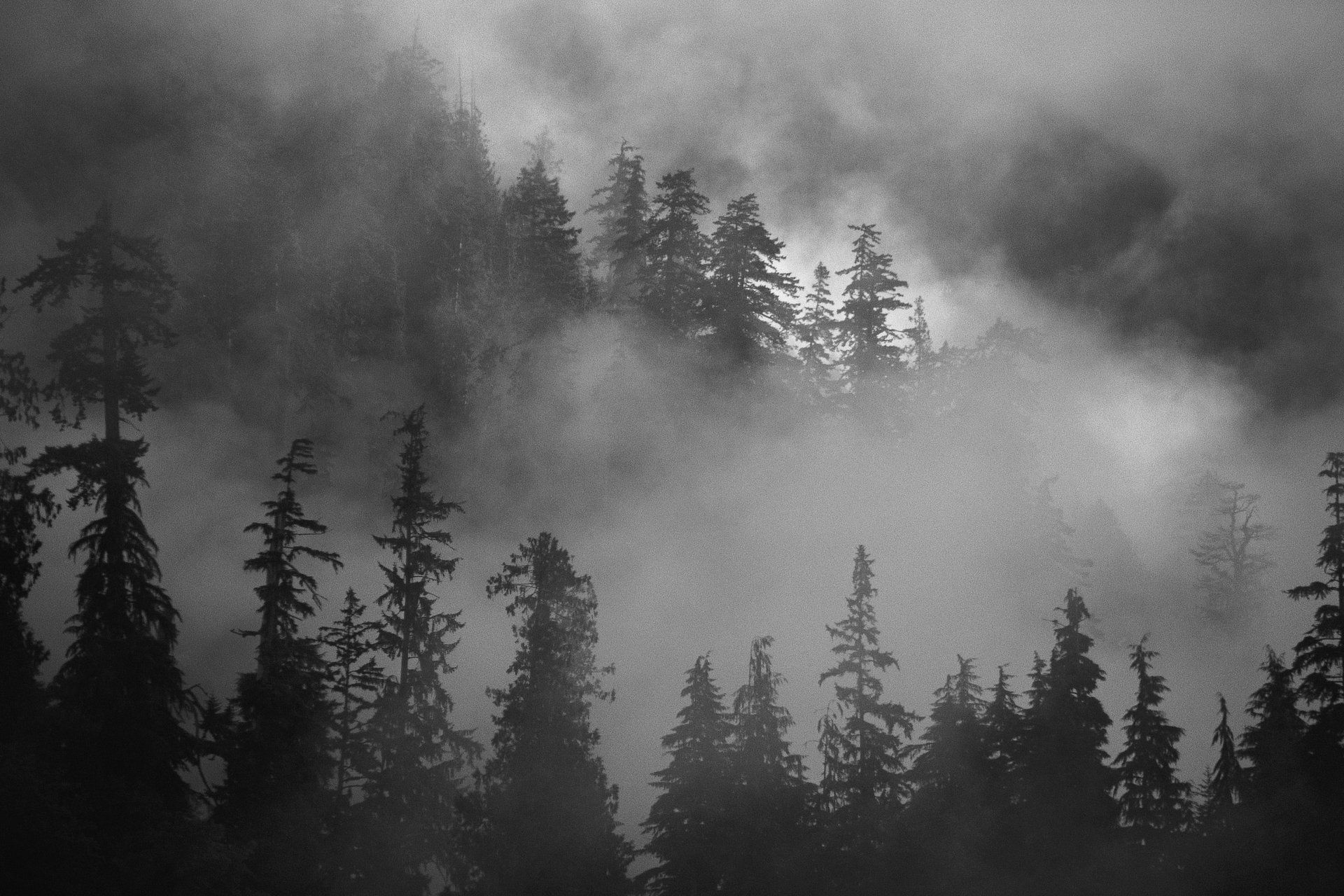
It’s only 8:45, and it’s pitch black. Part of that is because there are no lights around here; part of it is because the Black Hills really are black: very densely wooded, they’re described as “an island of trees in a sea of grass.” They cover some 6,000 square miles in southwestern South Dakota and northeastern Wyoming.

Native Americans have inhabited the area since at least 7000 BCE. The Arikara arrived by 1500 CE, followed by the Cheyenne, Crow, Kiowa and Pawnee. The Lakota arrived from Minnesota in the eighteenth century and drove out the other tribes, claiming the land; they’re the ones who called the area Paha Sapa, “hills that are black.” For the Lakota, the Paha Sapa is the center of the world, the omphalos, the place of the gods; it is where the warriors would make their Vision Quests.

The moon is very bright. I am unexplainably nervous. And I haven’t found a place to sleep yet.

The second shock, and the one that set everything else in motion, was the visit to Mount Rushmore National Memorial. The nighttime view was dramatic, I’ll give it that. And at 10 p.m., the crowds were manageable. But I couldn’t shake the overwhelming sense that this was a desecration, as if stealing the land wasn’t enough, we had to carve four of our presidents’ faces into the mountain just to make a point. Now they stand eternal guard over the spoils of war, betrayal, and theft.

The feeling

of the violation of sacred space continues to haunt me as I leave the park and head further and further up the mountain. The moon is no help at all; there are no lights anywhere except from my own car (I rarely meet another vehicle on the road), and even the high beams seem to be swallowed up by the inky night. The road is absurdly steep and narrow, and it winds around crazily in the darkness only to double back on itself without really getting anywhere. I try retracing my steps, to get back down the mountain, but I just keep going higher and higher. And I get utterly and sickeningly lost.

I start feeling a tremendous sense of vertigo, the kind I used to have in my fever dreams, when I’d climb a ladder into the night skies, and suddenly it would twist and sway, and I’d scream to keep from falling. The nose of my car is pointed up in the air and I have no frame of reference and I’m disoriented and I’m dizzy and I’m starting to hyperventilate.

Now, I am not someone who is prone to nameless terrors. I tend to be the one who keeps his head when all about me are losing theirs, as Kipling might put it. But this night I experience a panic that practically engulfs me. For two hours I feel as if I am going insane, pursued by irrational fears, buffeted by dread. It feels like I’m having a nightmare from which I cannot wake up.

On the tape I am crying, praying, gulping for air, speaking gibberish. At one point I say, “It’s too bright, it’s too bright,” even though the darkness is impenetrable. I remember seeing something (a building?) where some intense light was being generated, as if someone were welding (but at midnight?); the color was a cesium blue and a blinding white, with an eerie green glow, and it hurts my eyes, even though all I want is a little light.

Perhaps it’s so bright that I’m blinded. Perhaps I’m having a

UFO encounter, and this is a screen memory. Or perhaps my mind couldn’t take the contradiction and irony.

So lost, so desperate. No place to camp or stop for the night, no feeling of safety (but there was certainly no danger that I could identify). Where was I? I look at a map and see names like Iron Mountain Road. Cemetery Road. Holy Terror Trail (I kid you not). I discover that I have climbed to nearly 7200 feet. I drive on, wandering like a blind man. On the tape I am screaming now. It’s very hard to listen to.

Somehow—I don’t remember how, exactly, it’s something of a blur—I stumble upon a road that leads me down the mountain, and suddenly, after two hours of madness, I’m in ugly, bustling, touristy Rapid City, where there are no campgrounds available and no hotel or motel vacancies, a fact which, in my exhaustion, provokes its own (albeit more rational) feelings of panic and anxiety. I finally find what is apparently the last room available in the entire city, and have to pay dearly for the privilege. But I never wanted anything more in my life: it is safe, and rational, and out of those horrible hills.

Turns out the reason all the rooms were booked is that this is the weekend the Worldwide Church of God comes to town. They hold their convention here every year, and descend on Rapid City like 6,000 hungry locusts.

I sleep the sleep of the dead.

And tomorrow, in the daylight, I will head back into the Black Hills again.

Next episode: Custer and the Devil’s Tower


  • Facebook
  • Twitter
  • 1024px-Instagram_icon
  • YouTube Channel
  • Buy Me a Coffee
  • Amazon-icon
  • goodreads-trans
  • librarything_logos
  • litsy_logo

© 2022 by Craig R. Lloyd-Smith. All rights reserved.

bottom of page